
Blossom End Rot Fix: Tomatoes, Peppers and Squash
Updated
Figures checked against their sources on ; next check .
Blossom end rot: find the cause
Answer up to three questions about the fruit, the watering and what has been done around the roots. The path ends at the most likely cause and what to do about it.
Where is the dark, sunken patch on the fruit?
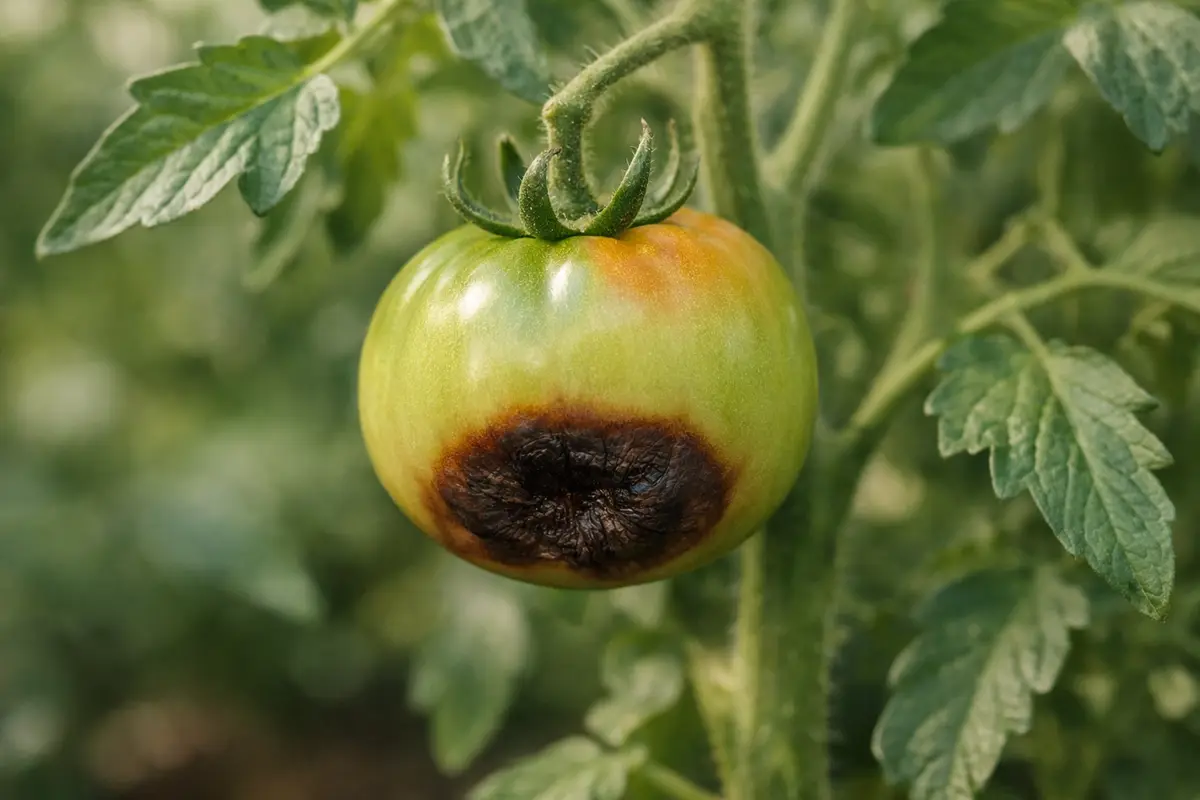
Blossom end rot starts as a light-tan, water-soaked spot on the end of the fruit away from the stem, then turns black and leathery.
On the bottom, opposite the stem
How has the watering been over the last few weeks?
Include rain. Calcium reaches the fruit with the water the plant takes up, so both fact sheets look at water first.
Dry spells, then a soaking or heavy rain
Deal with it soon
Uneven watering is the likely cause
UMass Extension says a lack of water, even a short one and especially after heavy rainfall, reduces the calcium the plant takes in. UW-Madison Extension names drought stress and alternating soil moisture extremes. Early fruit on young, fast-growing plants is the most susceptible.
What to do
- Water on a steady schedule so the soil never dries out and then floods.
- Mulch the bed to hold moisture through dry periods, as UW-Madison Extension advises.
Steady and even
What has been done around the roots?
Heavy feeding, especially with nitrogen or an ammonium fertilizer
Deal with it soon
Heavy feeding is competing with calcium
UW-Madison Extension says over-fertilizing with nitrogen pushes extra leaves, which pull calcium away from the fruit, and that high ammonium, potassium and magnesium in the soil hold back uptake. UMass Extension says products high in potassium, sodium, magnesium and ammonium compete with calcium.
What to do
- Stop adding nitrogen for now, and do not add more because the plant looks pale.
- If you feed again, UW-Madison Extension advises a nitrate form of nitrogen rather than an ammonium form. Choose it by soil test and follow its label for how much to apply.
- Keep watering even.
Hoeing or cultivating close to the plants
Deal with it soon
Root damage is cutting water uptake
Both fact sheets list root damage among the causes. UW-Madison Extension names cultivating too near the plants, which cuts roots, and damaged roots move less water and so less calcium.
What to do
- Stop hoeing or digging near the plants. Pull weeds by hand or mulch over them.
- Keep the soil evenly moist while the roots recover.
Neither of those
Deal with it soon
Test the soil before you add anything
Watering and feeding look fine, so check the soil itself. Both sheets say to test for calcium. UW-Madison Extension adds that lime raises pH, so check pH too. UMass Extension notes that some weed killers, such as 2,4-D and dicamba, can cause the same symptom.
What to do
- Send a soil sample to a lab through your state Extension office and ask for calcium and pH.
- If the test says calcium is low, add the amendment the lab names, at the rate the lab and the product label give.
- If a weed killer was used nearby, tell your Extension office. Do not spray anything on the plant yourself.
- Next season, choose a variety reported to tolerate blossom end rot. For peppers, UMass Extension says shorter, rounder varieties tend to tolerate it better than long ones.
Soggy or poorly drained, or the soil stays cold
Deal with it soon
Waterlogged or cold soil is limiting the roots
UW-Madison Extension lists waterlogged and cold soils among the conditions that hold back calcium uptake. UMass Extension advises proper drainage, because root disorders in wet ground cut the water a plant can take up.
What to do
- Stop watering while the soil is soggy, and fix the drainage in the bed.
- Keep the moisture even once the soil has drained.
Only on the side of the fruit that faces the sun
Keep an eye on it
Possibly sunscald, not blossom end rot
UMass Extension notes that the two look alike, but sunscald only appears on the side of the fruit exposed to the sun, while blossom end rot can form on surfaces the sun never reaches. On peppers, UW-Madison Extension adds, blossom end rot spots can resemble sunscald and sit on the side near the blossom end.
What to do
- Look at fruit hidden under the leaves. If the shaded fruit has the same patch at the blossom end, start again and answer that the patch is on the bottom.
- If only sun-facing sides are marked, the watering and feeding steps on this page are not the fix. Ask your state Extension office or a Master Gardener program to confirm.
Somewhere else, or on the stem end
Keep an eye on it
Probably not blossom end rot
Blossom end rot is a patch at the blossom end of the fruit, opposite the stem. A spot elsewhere points to a different problem that this tree does not cover.
What to do
- Look at the whole fruit and the leaves for spots, holes or cracks, and note what you see.
- Take a clear photo and ask your state's Extension office or a local Master Gardener program to identify it.
On a squash or zucchini: the fruit starts to grow, then browns, shrivels or rots
How does the squash fruit look?
Iowa State Extension says small squash fruit rot from either poor pollination or blossom end rot. Look at which end rots first, and at the weather while the flowers were open.
The small fruit stopped growing and shrivelled or browned all over, after a rainy spell
Keep an eye on it
Poor pollination, not blossom end rot
Iowa State Extension says squash fruit only develop fully when bees and other pollinators carry pollen from the male flowers to the female ones. If a female flower is not pollinated properly, the fruit begins to grow and then suddenly shrivels and dies. Pollinators are less active in rainy weather, so a wet spell can account for rotting small fruit, and drier weather should bring them back.
What to do
- Wait for drier weather and see whether the next fruit set normally.
- Do not add calcium or change the feeding for this. Iowa State says calcium is rarely needed even for true blossom end rot.
- If flowers open but no fruit forms, the squash flowers troubleshooter covers timing, weather and hand pollination.
A fruit that was growing well began to rot at the blossom end, and the rot spread
How has the watering been over the last few weeks?
Include rain. Calcium reaches the fruit with the water the plant takes up, so both fact sheets look at water first.
Dry spells, then a soaking or heavy rain
Deal with it soon
Uneven watering is the likely cause
UMass Extension says a lack of water, even a short one and especially after heavy rainfall, reduces the calcium the plant takes in. UW-Madison Extension names drought stress and alternating soil moisture extremes. Early fruit on young, fast-growing plants is the most susceptible.
What to do
- Water on a steady schedule so the soil never dries out and then floods.
- Mulch the bed to hold moisture through dry periods, as UW-Madison Extension advises.
Steady and even
What has been done around the roots?
Heavy feeding, especially with nitrogen or an ammonium fertilizer
Deal with it soon
Heavy feeding is competing with calcium
UW-Madison Extension says over-fertilizing with nitrogen pushes extra leaves, which pull calcium away from the fruit, and that high ammonium, potassium and magnesium in the soil hold back uptake. UMass Extension says products high in potassium, sodium, magnesium and ammonium compete with calcium.
What to do
- Stop adding nitrogen for now, and do not add more because the plant looks pale.
- If you feed again, UW-Madison Extension advises a nitrate form of nitrogen rather than an ammonium form. Choose it by soil test and follow its label for how much to apply.
- Keep watering even.
Hoeing or cultivating close to the plants
Deal with it soon
Root damage is cutting water uptake
Both fact sheets list root damage among the causes. UW-Madison Extension names cultivating too near the plants, which cuts roots, and damaged roots move less water and so less calcium.
What to do
- Stop hoeing or digging near the plants. Pull weeds by hand or mulch over them.
- Keep the soil evenly moist while the roots recover.
Neither of those
Deal with it soon
Test the soil before you add anything
Watering and feeding look fine, so check the soil itself. Both sheets say to test for calcium. UW-Madison Extension adds that lime raises pH, so check pH too. UMass Extension notes that some weed killers, such as 2,4-D and dicamba, can cause the same symptom.
What to do
- Send a soil sample to a lab through your state Extension office and ask for calcium and pH.
- If the test says calcium is low, add the amendment the lab names, at the rate the lab and the product label give.
- If a weed killer was used nearby, tell your Extension office. Do not spray anything on the plant yourself.
- Next season, choose a variety reported to tolerate blossom end rot. For peppers, UMass Extension says shorter, rounder varieties tend to tolerate it better than long ones.
Soggy or poorly drained, or the soil stays cold
Deal with it soon
Waterlogged or cold soil is limiting the roots
UW-Madison Extension lists waterlogged and cold soils among the conditions that hold back calcium uptake. UMass Extension advises proper drainage, because root disorders in wet ground cut the water a plant can take up.
What to do
- Stop watering while the soil is soggy, and fix the drainage in the bed.
- Keep the moisture even once the soil has drained.
In short: Blossom end rot is a shortage of calcium in the fruit, and the usual trigger is uneven water rather than a soil with too little calcium. Steady watering and mulch come first; a soil test comes before any amendment. On squash and zucchini, small fruit that shrivel after rain are more often a pollination problem.
What is happening to the fruit
Blossom end rot starts as a light-tan, water-soaked spot on the end of the fruit opposite the stem. The spot grows, turns black and leathery, and sinks. It is a disorder, not an infection: UMass Extension calls it a noninfectious, physiological disorder caused by a localized calcium deficiency in the blossom end, and the University of Wisconsin-Madison fact sheet says simply that it is caused by a lack of calcium in the fruit. Tomato and pepper are the usual victims, but Wisconsin adds eggplant and vine crops such as cucumber, squash, pumpkin and watermelon.
The surprise for most gardeners is that the soil is rarely the problem. Wisconsin's sheet allows that calcium can be low in the soil, then says that more often there is plenty, but the plant cannot take it up or move it into the fruit. Calcium travels with the water a plant pulls through its leaves. Leaves lose more water than fruit, so they get more of the calcium, and they keep it. Anything that interrupts water uptake, even for a short time, starves the fruit first. UMass adds that early fruit on young plants is the most susceptible, because those plants are growing fast and need more of both.
What the troubleshooter above asks
The tree asks where the patch is, then about watering, then about what has been done around the roots. Those are the levers both fact sheets name. Swings between dry and wet soil come first. Waterlogged or cold soil, which limits what the roots can take up, comes next. Then heavy feeding: Wisconsin says too much nitrogen pushes extra leaves that pull calcium away from the fruit, and both sheets list ammonium, potassium and magnesium as competitors. Root damage from hoeing too close completes the set.
The first question also screens out a look-alike. UMass points out that sunscald resembles blossom end rot but only appears on the side of the fruit facing the sun, while blossom end rot can form where the sun never reaches.
Worked example: a dry July followed by a storm
You water only now and then through a dry stretch, then a storm drops heavy rain on the beds. A week later the first tomatoes show the patch on their bottoms. Walk the tree: the patch is opposite the stem, so you answer the first question that way. For watering you choose the swing from dry spells to a soaking. The tree ends at uneven watering, which matches UMass's warning that a lack of water, even a short one and especially after heavy rainfall, cuts calcium intake. The next steps are a steady watering schedule and mulch to carry the bed through dry periods. You do not start by adding anything to the soil.
About calcium products
Both fact sheets mention ways to add calcium. UMass describes liming with dolomitic or high-calcium limestone 2 to 4 months before planting, and Wisconsin mentions bonemeal or lime when a test shows the soil is short. This page gives no amounts, and neither does the troubleshooter: the right material and rate come from a soil test and from the product label, which is the legal instruction for using it. Lime also raises pH, Wisconsin warns, and it puts about 6.5 as ideal for most vegetables, so test pH whenever you lime.
Blossom end rot on yellow squash and zucchini
The first version of this page covered tomatoes and peppers, where the disorder is best known. Four more Extension pages say it strikes squash too. University of Maryland Extension lists squash, pumpkin and watermelon among the crops it affects, and calls it a shortage of calcium in enlarging fruit that typically appears when plants are growing rapidly, often on the first fruit. Iowa State Extension names summer squash and describes the look on zucchini: the blossom end begins to rot and, within a short time, the entire fruit has rotted. Utah State lists squash among its host crops and shows a squash in its photographs. South Dakota State is more cautious and says the disorder may occasionally occur in summer squash, including zucchini, with the first fruit of a season often the worst hit.
Yellow squash and zucchini are both summer squash, so the pages cover both. They agree that it can happen and differ on how often, and none of them gives a count.
Squash rotting from the tip: pollination or blossom end rot?
Iowa State is the page that tells the two apart. A gardener asked why zucchini fruit grew, then quickly turned brown and rotted. The answer was that the small fruit could be rotting from poor pollination or from blossom end rot. Without proper pollination, the fruit begins to grow and then suddenly shrivels and dies, and because bees and other pollinators are less active in rainy weather, a wet spell can be enough. Drier weather should bring them back. With blossom end rot, the blossom end of the fruit rots first and the whole fruit follows quickly.
The tree above asks which you see. Small fruit that stopped and shrivelled after rain go to a pollination outcome, and from there to the squash flowers troubleshooter, which covers timing, weather and the flowers themselves. A fruit that was growing well and began to rot at the blossom end goes on to the watering and feeding questions used for tomatoes.
What the squash pages recommend
Iowa State says that in most cases there is no need to add calcium to the soil. It asks for even moisture, watering once a week in dry weather, and no over-fertilizing, because uneven moisture and excess nitrogen both inhibit calcium uptake. Maryland keeps the soil pH at 6.3 to 6.8, mulches, waters deeply at least once a week when rain is lacking, avoids high-nitrogen fertilizers such as urea, and removes affected fruit at once. Utah State adds infrequent deep irrigation, no ammonium-based nitrogen, no hoeing near the plants, no water stress at night and no overwatering in heavy clay. Maryland also suggests mixing a calcium source into the planting hole before transplanting, which Iowa State does not call for, and this page gives no amounts for it: a soil test comes first.
Example: zucchini after a week of rain
A gardener finds half-grown zucchini browning and shrivelling a week after steady rain. She answers the first question with the squash option, then chooses the small fruit that stopped growing after a rainy spell. The tree ends at poor pollination, not blossom end rot, so she waits for drier weather and leaves the soil and the fertilizer alone.
Related pages
Uneven watering and a skipped soil test are two of the commonest first-year mistakes, and the first-year vegetable garden checklist builds both habits in. To keep tomatoes and peppers from returning to the same bed every year, see crop rotation by plant family. If your fruit does not match these descriptions, send a photo to your state Extension service.
Sources (6)
- UMass Extension Vegetable Program (adapted by G. Higgins), Solanaceous, Blossom End Rot, last updated December 27, 2018 umass.edu
- University of Wisconsin-Madison Division of Extension (Joy and Hudelson), Blossom End Rot, revised November 19, 2024 pddc.wisc.edu
- University of Maryland Extension, Blossom End Rot in Vegetables, updated June 27, 2024 extension.umd.edu
- Iowa State University Extension and Outreach, Why are my zucchini fruit rotting before harvest?, last updated August 7, 2024 yardandgarden.extension.iastate.edu
- South Dakota State University Extension (Burrows and Roduner), Blossom End Rot on Tomatoes and Other Vegetables, updated September 15, 2020 extension.sdstate.edu
- Utah State University Extension, Utah Plant Pest Diagnostic Laboratory IPM fact sheet, Blossom End Rot (undated page) extension.usu.edu