
Crop Rotation by Plant Family: Which Vegetables Share a Family
Updated
Figures checked against their sources on ; next check .
| Family | Vegetables | Cover crops and weeds in the same family |
|---|---|---|
| Nightshade (Solanaceae) | eggplant, pepper, potato, tomato, tomatillo, ground cherry, husk cherry | Weeds: nightshade, horsenettle, jimsonweed, buffalobur |
| Gourd (Cucurbitaceae) | cucumber, muskmelon, pumpkin, summer squash, watermelon, winter squash, cantaloupe, melon | Weeds: burcucumber |
| Pea (Fabaceae) | bush bean, green bean, wax bean, snap bean, kidney bean, lima bean, pea, pole bean, edamame | Cover crops: cowpea, sunn hemp, red clover, white clover, hairy vetch, field peas, crimson clover. Weeds: black medic, Dutch white clover |
| Amaryllis (Amaryllidaceae) | chives, garlic, leek, onion, shallot, green onion, scallion | Weeds: onion weed, star grass |
| Mustard (Brassicaceae) | broccoli, Brussels sprouts, cabbage, cauliflower, Chinese cabbage, Bok choy, collards, kale, kohlrabi, mustard greens, radish, rutabaga, turnip | Cover crops: oilseed radish, field turnip, rapeseed, yellow mustard. Weeds: hairy bittercress, shepard's purse, garlic mustard, pennycress |
| Amaranth (Amaranthaceae) | beet, spinach, Swiss chard | Weeds: lambsquarter, pigweed, waterhemp |
| Carrot (Apiaceae) | carrot, celery, parsley, parsnip, celeriac | Weeds: queen Anne's lace, poison hemlock, giant hogweed, wild carrot, wild parsnip |
| Grass (Poaceae) | ornamental corn, popcorn, sweet corn | Cover crops: cereal rye, winter wheat, winter barley, annual rye, oats, Sorghum-Sudangrass, teff. Weeds: crabgrass, quackgrass, goosegrass, foxtail, nimblewill, barnyardgrass |
| Sunflower (Asteraceae) | endive, lettuce, sunflower, salsify | Cover crops: sunflower. Weeds: thistle, mugwort, quickweed, fleabane, dandelion, ragweed, horseweed, cocklebur |
| Morning Glory (Convolvulaceae) | sweet potato | Weeds: bindweed, ivyleaf morning glory |
| Mallow (Malvaceae) | okra | Weeds: velvetleaf, common mallow |
| Knotweed (Polygonaceae) | – | Cover crops: buckwheat. Weeds: smartweed, Japanese knotweed, prostrate knotweed, curly dock |
In short: Rotate by family, not by crop: tomato, pepper, potato and eggplant are all nightshades, and squash, cucumber and melon are all gourds. Keep a family out of one spot for several years.
Why the family matters
Crop rotation means moving where you plant each kind of vegetable from one year to the next. Iowa State Extension explains the reason: crops in the same botanical family are often hit by the same diseases and insects, and many disease organisms live in the soil for several years. Plant the same family in the same spot and the problem is waiting for it. Move the family elsewhere and you break the pest's life cycle by taking away the host it needs. Penn State Extension makes the same point more briefly, listing rotation by plant family as part of successful pest management.
The catch is that rotating tomato into last year's pepper bed does nothing, because both are nightshades. The table above lists the 11 vegetable families as Iowa State groups them, and a few of the memberships surprise people. Potato and tomato are in one family, and so are cucumber and squash. Radish belongs with cabbage, lettuce with sunflower, and sweet corn with the grasses.
Weeds and cover crops count too
The third column is easy to skip and worth reading. Iowa State points out that common garden weeds belong to some of the same families as your vegetables, so they can carry the same diseases and insects from year to year. Horsenettle and jimsonweed are nightshades; lambsquarter and pigweed sit with beet and spinach. Cover crops add a layer as well: crimson clover and hairy vetch are in the pea family, and oilseed radish is a mustard. If you sow a cover crop, count its family in the plan.
Soil fertility is the other reason Iowa State gives for rotating. Members of the gourd family tend to use a lot of nitrogen, the onion family takes a greater share of potassium, and the bean family can help add nitrogen, so moving the families around evens out what each bed loses.
How long to wait
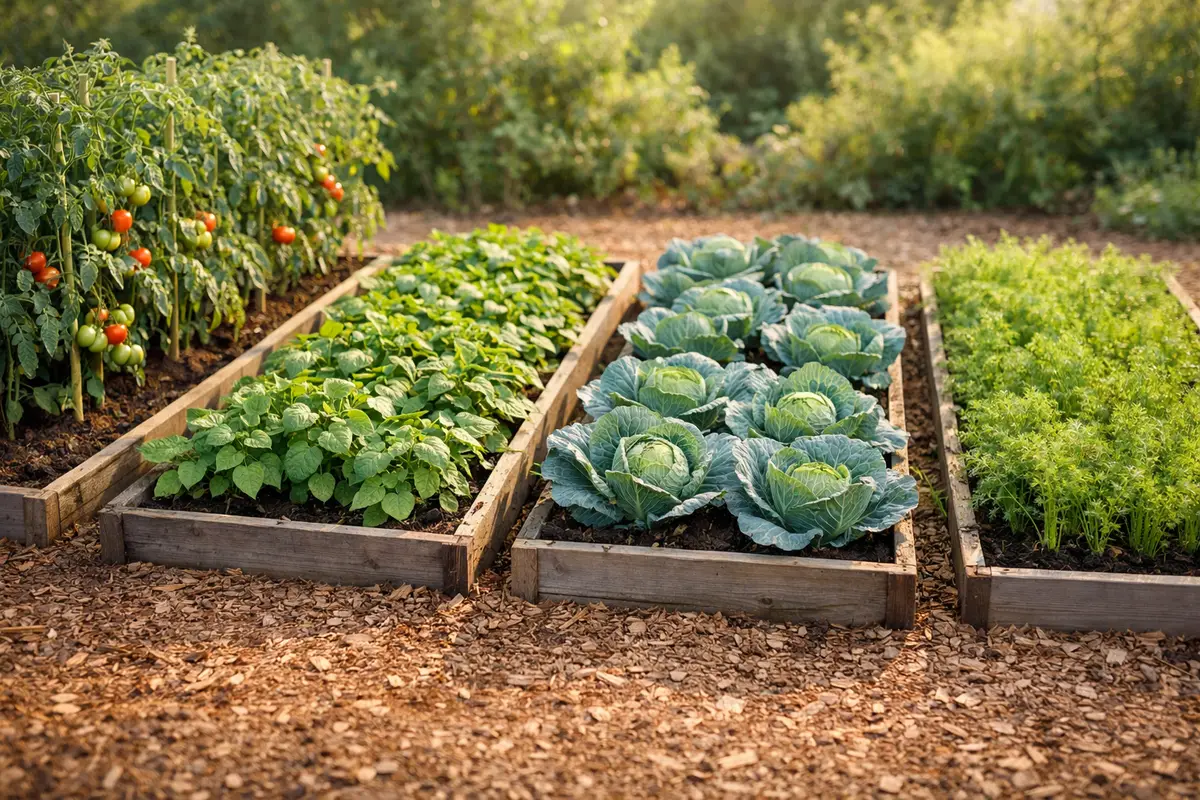
Iowa State advises against planting the same family in one location for 3 to 4 years, or 5 or more years if you can manage it. Its page also shows the easiest way to get there: with 4 separate raised beds, you can move the families around the beds so each one comes back to the same bed only once every four years. A single plot divided into zones works less well, Iowa State says, because the whole plot tends to be dug at once and the soil, with whatever is overwintering in it, gets mixed between zones. Even so, rotating as best you can still helps.
Worked example: a nightshade bed
Suppose last year's tomatoes grew in your sunniest bed. Look at the table: tomato is a Nightshade, as are potato and pepper, so planting potatoes or peppers there next year would not rotate anything. Put a different family in that bed instead, such as beans from the pea family or onions from the amaryllis family. Kale, a Mustard crop like radish, is another candidate. Then keep the nightshades out of the bed for the wait given above.
The same reasoning works for squash. Summer squash is a Gourd crop, so cucumbers, pumpkins and melons count as the same family and move as a group. Families with only one or two crops, such as okra or sweet potato, can be grouped with others or used to fill gaps, as Iowa State suggests. For a heirloom tomato that keeps getting sick, Iowa State suggests growing it in a container, out of the main plot altogether.
Putting it into a plan
Keep a garden log, a map or simply a photo of each year's beds, with the family written beside each one, and check the new plan against the last few years before you plant. The first-year garden checklist includes that step. When you lay out a bed, the spacing chart gives the distance between plants. Rotation works on what carries over in the soil from one season to the next, which is why Iowa State prefers the longer wait when you can manage it. Iowa State's list is written for Iowa gardens, so your own state's Extension office may group a crop or two differently.
Sources (2)
- Iowa State University Extension and Outreach (Aaron Steil), Crop Rotation in the Vegetable Garden yardandgarden.extension.iastate.edu
- Penn State Extension, Home Gardening: Planting and Growing extension.psu.edu