
Squash Flowers but No Fruit: Timing, Weather or Pollination?
Updated
Figures checked against their sources on ; next check .
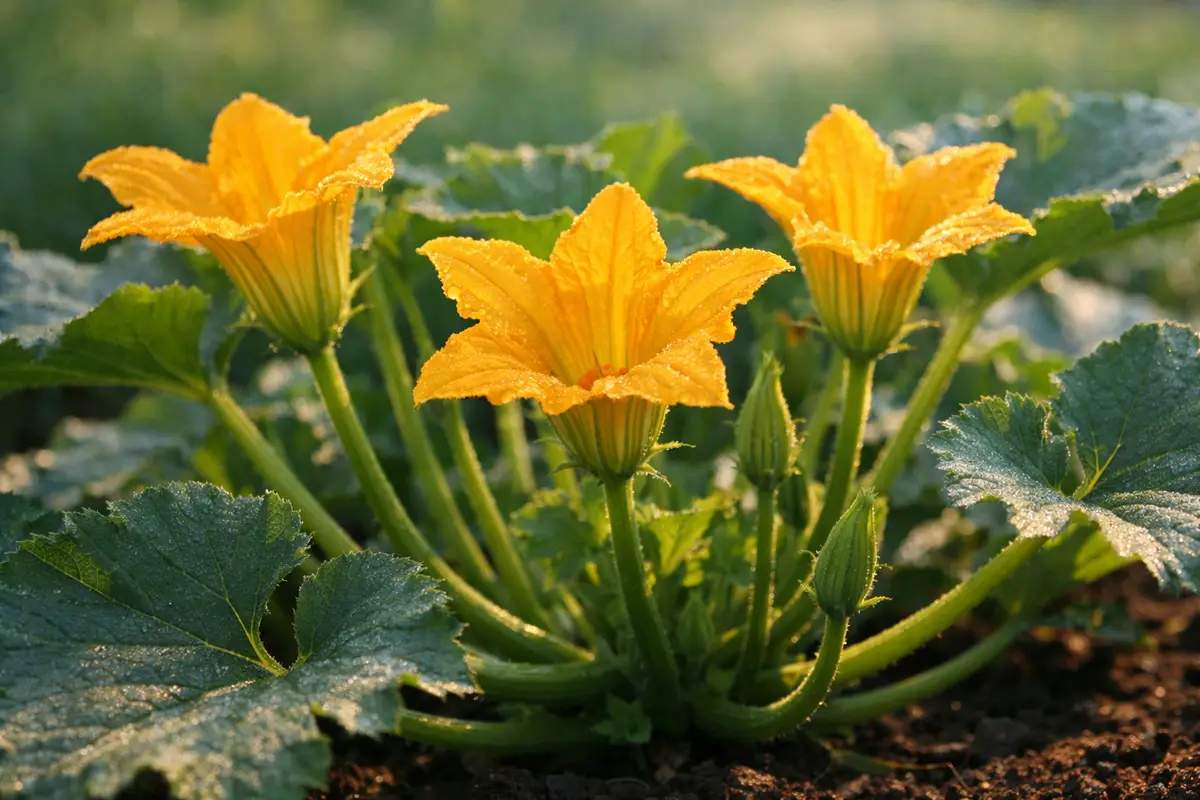
Squash flowers but no fruit: what is missing?
Check which kind of flower is open first. Then, if both kinds are open, think about the weather and the feeding.
Which flowers are open?
Male flowers sit on a long, thin stem. Female flowers have a swollen ovary, a tiny fruit, at the base of the flower.
Only male flowers so far
Keep an eye on it
Normal timing: male flowers open first
Ohio State Extension says the male flowers bloom first and fall off the plant, and that a week or so later both male and female flowers bloom. Mississippi State Extension adds that beginning gardeners often worry when those first male blooms wither and fall without fruit, but this is the usual order.
What to do
- Wait. Check the plants each morning for a flower with a swollen base.
- If no female flowers appear after that, start the tree again and answer the questions about heat, water and nitrogen.
Female flowers, but no male flowers yet
Keep an eye on it
The female flowers opened early
Mississippi State Extension describes a planting of yellow squash whose first female blooms opened a day or so before any male blooms, so there was nothing to pollinate them, even though honeybees and native bees were active. Once the male blooms opened, the planting had no more trouble setting fruit.
What to do
- Wait for the male flowers. Female flowers that open once male flowers are out can be pollinated.
- If you must spray an insecticide, Mississippi State Extension says to spray only when needed and as late in the day as possible; the roughly 30 minutes between sunset and dark is ideal because most bees have stopped foraging. Follow the product label.
Both kinds, but the female flowers shrivel or drop, or the fruit is small and misshapen
What has the weather and feeding been like?
Extreme heat
Keep an eye on it
Heat is shifting the flower balance
Ohio State Extension says that when it is too hot, the plant produces only male flowers and the female flowers are delayed, and that heat can make flowers wilt and die before pollinators can move pollen between them.
What to do
- Keep checking each morning for female flowers: in heat they come late rather than not at all.
- Hand-pollinate with a small paintbrush if you see female flowers but few bees.
Dry spell or drought
Deal with it soon
Dry soil is dropping the female flowers
Ohio State Extension says drought stress can make the female flowers abort, and that heat, drought and too much water can all make flowers wilt and die, so pollinators cannot carry pollen from plant to plant.
What to do
- Water through dry spells so the plants are not drought-stressed while they flower.
- Hand-pollinate new female flowers in the morning while they are open.
Very wet or overwatered, or heavy nitrogen feeding
Deal with it soon
Too much water or nitrogen is delaying fruit
Ohio State Extension says too much water can make flowers wilt and die, and that high nitrogen levels can delay female flower production, so the fruit may not mature in time.
What to do
- Ease off watering to what the soil needs.
- Hold back nitrogen feeding. Feed by soil test and the product label.
- Hand-pollinate female flowers in the morning once they appear.
Mild and watered well, but I rarely see bees
Deal with it soon
Pollination may be the gap
Ohio State Extension says the blossoms stay open for about 4 hours, and a flower that is not pollinated in that time will not produce a fruit, or the fruit will be misshapen. Any insect can pollinate squash, but bumblebees and squash bees do most of it, foraging in the morning while the flowers are open.
What to do
- Check the flowers early in the morning. Hand-pollinate with a small paintbrush, moving pollen from a male flower to the centre of a female flower.
- Protect pollinators: spray insecticides only when needed, as late in the day as possible, and follow the label, as Mississippi State Extension advises.
In short: Squash makes separate male and female flowers, and fruit only forms when pollen reaches a female flower in the few hours it is open. Early on, plants usually show only male flowers, which is normal; heat, drought, too much water and too much nitrogen can all delay or kill the female ones.
One plant, two kinds of flower
Squash, zucchini and the other cucurbits carry separate male and female blooms on the same plant. Ohio State Extension tells them apart this way: male flowers sit on long, skinny stems, and a female flower has a swollen ovary at its base, which is the beginning of the fruit. Mississippi State Extension puts it even more simply: the female blooms are the ones with a small fruit attached. Nothing becomes a squash unless pollen moves from a male flower to a female one.
The order matters. Ohio State says the male flowers bloom first and fall off the plant, and that both kinds bloom together a week or so later. Mississippi State notes that beginning gardeners often worry when those first male blooms wither and drop without fruit. A plant with blossoms and no squash in its first stretch of flowering is usually just early.
A narrow window
Each blossom is open only briefly. Ohio State puts it at about 4 hours, and says a flower that is not pollinated in that time will not produce a fruit, or the fruit will be misshapen. Any insect pollinator can do the job, but bumblebees and squash bees do most of it, and they forage in the morning while the flowers are open. That is why the morning is the time to look, and the time to step in with a paintbrush if the bees are scarce.
Mississippi State describes the reverse of the usual order. In one planting of yellow squash, the first female blooms opened a day or so before any male blooms, so nothing was there to pollinate them, even though honeybees and native bees were busy in the garden. The small fruit on those first blooms failed. Once the male blooms opened, the planting set fruit without further trouble.
Weather and feeding
Ohio State lists the conditions that get in the way. When it is too hot, the plant makes only male flowers and the female ones are delayed. Drought stress can make the female flowers abort. Heat, drought and too much water can all make flowers wilt and die, and then pollinators cannot carry pollen from plant to plant. High nitrogen can delay the female flowers so long that fruit may not mature in time. The troubleshooter above turns those into a short set of questions.
Worked example: all male flowers in the first stretch
Your zucchini has been flowering for several days, and every flower that opens is on a long, skinny stem, then falls off. On the first question you answer that only male flowers have opened. The tree ends at the normal-timing outcome: wait a week or so, and look each morning for a flower with a swollen base. When one opens, you can leave it to the bees or move pollen by hand, touching a small paintbrush to a male flower and then to the centre of the female while it is open.
If the plant then makes both kinds of flower but the female ones shrivel during a hot spell, you would take the third answer on the first question and the heat answer on the second. That outcome explains that heat delays the female flowers and tells you to keep watching each morning and hand-pollinate when they appear.
Protecting the pollinators
Mississippi State advises spraying insecticides only when needed and as late in the day as possible. It names roughly 30 minutes between sunset and too dark to see as the ideal time, because most bees have stopped foraging by then. Any product you use has to follow its label; this page names no products and gives no amounts.
Related pages
Iowa State Extension puts squash, cucumber, pumpkin and melon in one plant family, which matters when you plan next year's beds: see crop rotation by plant family. To check that the vines have room, the plant spacing chart gives NC State's distances. If tomatoes in the same garden are rotting at the bottom, that is a separate problem, covered by the blossom end rot fix.
Sources (2)
- Ohio State University Extension, Fairfield County news (source: Carrie Jagger, OSU Extension-Morrow County), The Birds and The Bees of Cucurbit Flowers, July 25, 2022 u.osu.edu
- Mississippi State University Extension (Blake Layton), Unpollinated Squash, Bug's Eye View No. 13, 2015 extension.msstate.edu