
Soil Temperature for Planting: Germination Chart for Vegetables
Updated
Figures checked against their sources on ; next check .
| Crop | Lowest | Best range | Best single temperature | Highest |
|---|---|---|---|---|
| Asparagus | 50°F | 60–85°F | 75°F | 95°F |
| Bean, lima | 60°F | 60–85°F | 85°F | 85°F |
| Bean, snap | 60°F | 65–85°F | 80°F | 95°F |
| Beet | 40°F | 50–85°F | 85°F | 85°F |
| Cabbage | 40°F | 45–95°F | 85°F | 100°F |
| Carrot | 40°F | 45–85°F | 80°F | 95°F |
| Cauliflower | 40°F | 45–85°F | 80°F | 100°F |
| Celery | 40°F | 60–70°F | 70°F | 85°F |
| Chard, Swiss | 40°F | 50–85°F | 85°F | 95°F |
| Corn | 50°F | 60–95°F | 95°F | 105°F |
| Cucumber | 60°F | 60–95°F | 95°F | 105°F |
| Eggplant | 60°F | 75–90°F | 85°F | 95°F |
| Lettuce | 35°F | 40–80°F | 75°F | 85°F |
| Muskmelon (cantaloupe) | 60°F | 75–95°F | 90°F | 100°F |
| Okra | 60°F | 70–95°F | 95°F | 105°F |
| Onion | 35°F | 50–95°F | 75°F | 95°F |
| Parsley | 40°F | 50–95°F | 75°F | 95°F |
| Parsnip | 35°F | 50–70°F | 65°F | 85°F |
| Pea, English | 40°F | 40–75°F | 75°F | 85°F |
| Pepper | 60°F | 65–95°F | 85°F | 95°F |
| Pumpkin | 60°F | 70–90°F | 90°F | 100°F |
| Radish | 40°F | 45–90°F | 85°F | 95°F |
| Spinach | 35°F | 45–75°F | 70°F | 85°F |
| Squash | 60°F | 70–95°F | 95°F | 100°F |
| Tomato | 50°F | 70–95°F | 85°F | 95°F |
| Turnip | 40°F | 60–105°F | 85°F | 105°F |
| Watermelon | 60°F | 70–95°F | 95°F | 105°F |
In short: Every crop has a lowest soil temperature below which its seed barely germinates, a best range, and a ceiling. Lettuce and spinach start in cold soil; tomato, pepper and squash want it warm. Read the soil early in the morning, a few inches down, not the air at noon.
How to use this chart
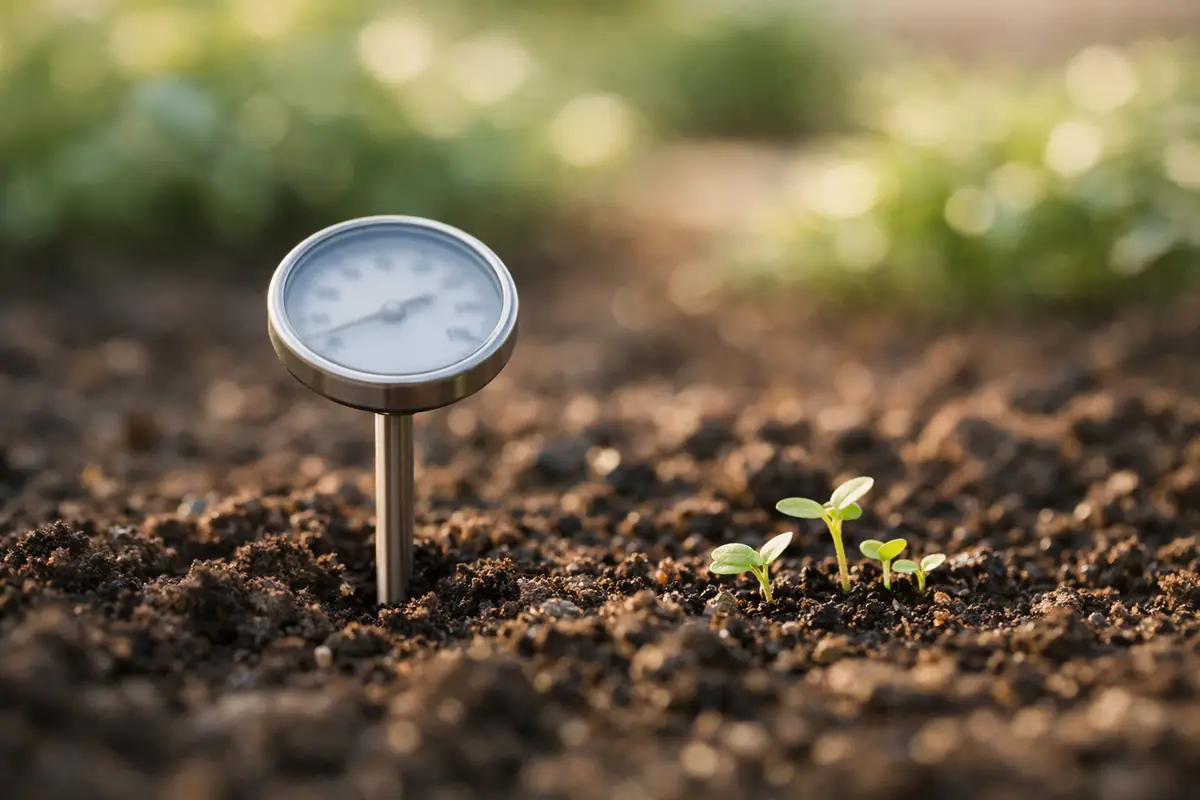
Start with a thermometer, not the calendar. Colorado State University Extension calls soil temperature one of the best ways to decide when to plant in spring, and it says how to take the reading: at 8 a.m., 4 inches deep. Beans are the exception; CSU measures them at 6 inches. Compare that morning reading with the crop's row above.
The column called Lowest is the floor. Below it, seed sits in the ground, takes up water and waits, and it is exposed to rot for far longer than it should be. The Best range column is where the seed comes up quickly, and the single Best temperature is the optimum that Alabama Extension's authors give inside that range. Highest is the ceiling. Colorado State lists its own maximums because hot soil can get in the way of germination in summer, so this column matters most for a late-summer sowing of lettuce or spinach.
The chart comes from Alabama Cooperative Extension at Auburn University, which revised it for current use; the revision date is in the source list. Its introduction makes the practical point plainly: in the field, you get the right soil temperature for germination mainly by choosing the right planting date, and plastic mulch and cover crops can help nudge it.
Cool crops and warm crops
Lettuce shares the coolest floor on the chart, 35°F, with onion, parsnip and spinach. Lettuce also tops out at 85°F, so a hot August bed is a poor place to sow it. Spinach has a similar profile: a floor of 35°F and a ceiling of 85°F. English peas are listed at a floor of 40°F, which is why they are among the first seeds in the ground.
At the other end, the warmest floor is 60°F, shared by crops such as cucumber, squash, snap beans and pepper. Tomato sits between the two camps. Its floor is 50°F, but the best range is 70–95°F, with a best single temperature of 85°F. Corn is listed at a floor of 50°F. In all, 14 of the 27 crops have a floor at or below 40°F, and 10 need 60°F or more.
Worked example: a cold bed in early spring
Say your bed reads cool at 8 a.m. on several mornings running, and you have peas, spinach and snap beans to sow. Peas have a floor of 40°F and spinach 35°F, so both can go in once your reading clears those marks. Snap beans need 60°F, and you take their reading at 6 inches rather than 4 inches. If that deeper reading is still below the bean floor, the beans wait, however warm the afternoon feels.
Indoors the same logic applies to a seed tray. Pepper's floor is 60°F and its best single temperature is 85°F, so a shelf that suits a flat of lettuce can be too cold for peppers. If a tray is not sprouting at all, work through the seeds not germinating troubleshooter, which asks about the tray's warmth using this chart.
What the chart does not tell you
It does not say how long germination takes, how deep to sow, or when to sow relative to frost. Soil temperature and the last spring frost are two separate questions: a bed can be warm enough for beans while a late freeze is still possible. Check your station's dates on the frost dates lookup before you set out tender plants, and use the seed starting schedule for how many weeks to grow transplants indoors. For a crop not on the list, follow the seed packet and your state Extension service.
Sources (2)
- Alabama Cooperative Extension System (Auburn University; Oliveira, da Silva, Smith and Kemble), Soil Temperature Conditions for Vegetable Seed Germination, ANR-1061, revised January 2023 aces.edu
- Colorado State University Extension (Whiting, O'Meara and Wilson), Vegetable Planting Guide, GardenNotes #720, published June 2018, reviewed September 2024 extension.colostate.edu