
HOA Turf Replacement Letter: Ask to Swap Lawn for Clover or Beds
Updated
Figures checked against their sources on ; next check .
HOA request to replace part of your lawn
This letter is a template, not legal advice. Read your HOA's covenants and its architectural review rules before you send it, and ask the committee what form it wants. It is built in your browser; nothing you type is sent anywhere.
Your letter
Still to fill in: Your name, Property address, HOA or committee name, Date, Which part of the lawn, What you will plant and when.
In short: Fill in the fields, choose the option you want to plant, and copy or print a letter to your HOA. It is a template, not legal advice, and it works best after you have read your covenants.
Before you write
A homeowners association usually has written rules, called covenants or design guidelines, about what a front yard may look like. Read them first, because the letter is only as good as its fit with those rules. Some associations want a form, a plan or a sketch instead of a letter; some want the request sent to a named committee by a set date. Ask the manager what format is wanted and use the letter as the cover note. This page is not legal advice, and the letter does not claim any legal right to make the change.
The letter is built in your browser. Nothing you type is sent anywhere, and you can copy it, print it or download it as a text file.
The options, in Iowa State's words
The reasons in the letter come from Iowa State University Extension's publication on lawn alternatives, which starts from a fair point: choosing an alternative means weighing how the space is used, how much upkeep you will give it, and what look you can accept. A committee will weigh the same things.
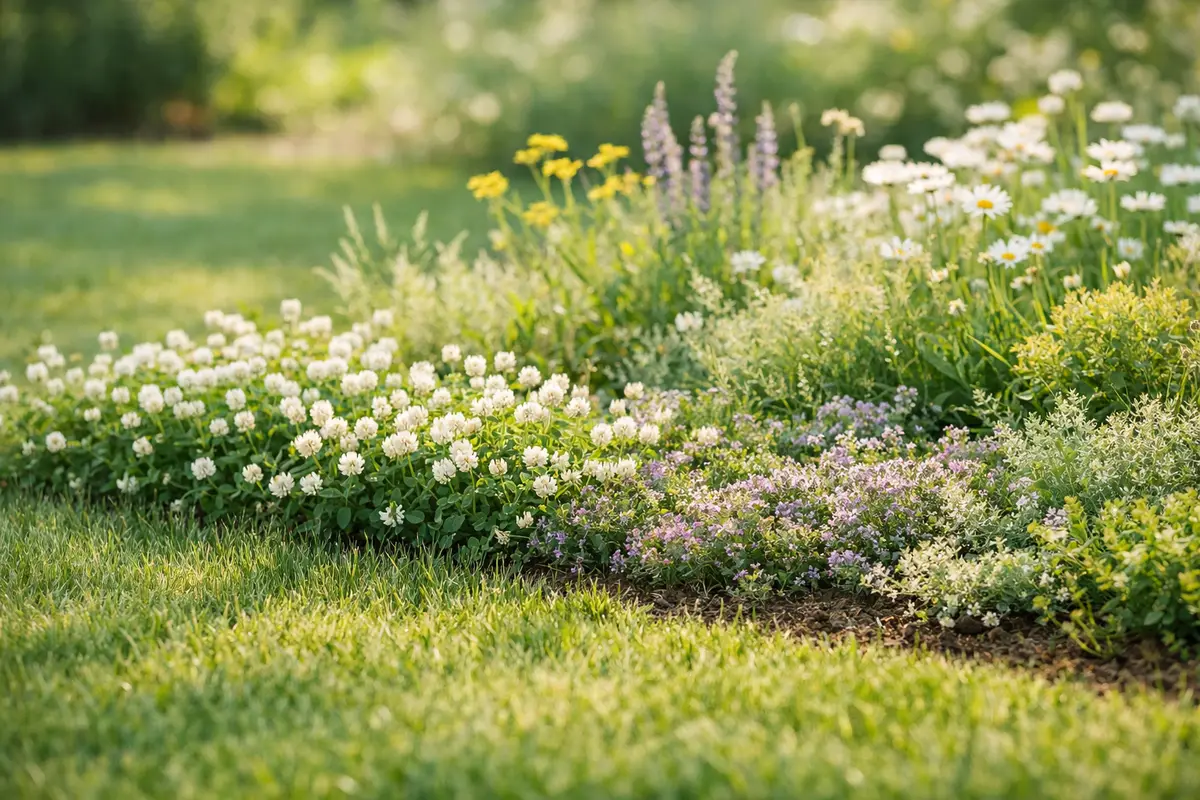
For a pollinator lawn, Iowa State says that mixing flowering plants such as clover into turf provides more food and habitat for pollinators, and that with the right species the lawn still works as a place to play and a backdrop for the house. For groundcovers, it says that once established they need less maintenance than turf and can out-compete most weeds. For garden beds of perennials, shrubs and trees, it lists lower water and chemical use and better handling of stormwater, and it says the change can be phased in rather than done at once.
The other options keep grass. Fine fescues grow more slowly than many traditional turf grasses and need less mowing, though Iowa State says most plantings still benefit from a mowing at least once or twice each year. Or you can keep the lawn you have and mow it less: Iowa State suggests moving from every 7 days to every 10 to 14 days (14 to 20 days in summer) with the mower set at 3.5 to 4 inches.
A warning from the same page
Iowa State notes that most municipalities issue citations for unkempt lawns, and that simply not mowing or otherwise managing a space will often result in fines or mowing fees. That is why every version of the letter promises to keep the area planted, edged and maintained. A stated plan for upkeep answers a committee's first worry directly; if you cannot make that promise, do not send the letter. The same caution applies to the biggest change of all: Iowa State calls a prairie or meadow a multi-year commitment, which takes about 3 years to look like a cohesive planting and 7 years to become fully established, so the letter does not offer it as a quick swap.
Worked example: clover in a front lawn
Suppose you want to add clover to the front lawn. Choose the clover option. Name the committee, add your address and today's date, and describe the area in your own words, such as the strip between the sidewalk and the house. In the plan field, say what you will sow and the month you will do it. The letter then states your request, cites Iowa State's point about pollinators and the lawn's continued use, promises upkeep and offers to supply a plan. Read the preview, fill every placeholder in brackets, and attach any photos your association asks for.
Keep a copy
Send the letter in a way that leaves a record, such as an email to the manager or a letter with a delivery receipt, and keep a copy. If the answer is no, ask which guideline the request conflicts with, and whether a smaller area or a different option would pass. If you are replacing turf with a vegetable bed, the first-year garden checklist covers the site and soil, and if the lawn has an irrigation system, the sprinkler winterization checklist covers closing it down for winter.
Sources (1)
- Iowa State University Extension and Outreach (Aaron Steil), Lawn Alternatives to Turfgrass, last reviewed July 2026 yardandgarden.extension.iastate.edu