
When to Plant Green Beans in North Carolina: Spring and Fall Windows for Central NC
Planting dates for green beans from NC State Extension in North Carolina, with 50% frost dates from NOAA for Raleigh Durham International Airport, Piedmont Triad International Airport, and Charlotte Douglas Airport and one worked case.
Updated
Figures checked against their sources on ; next check .
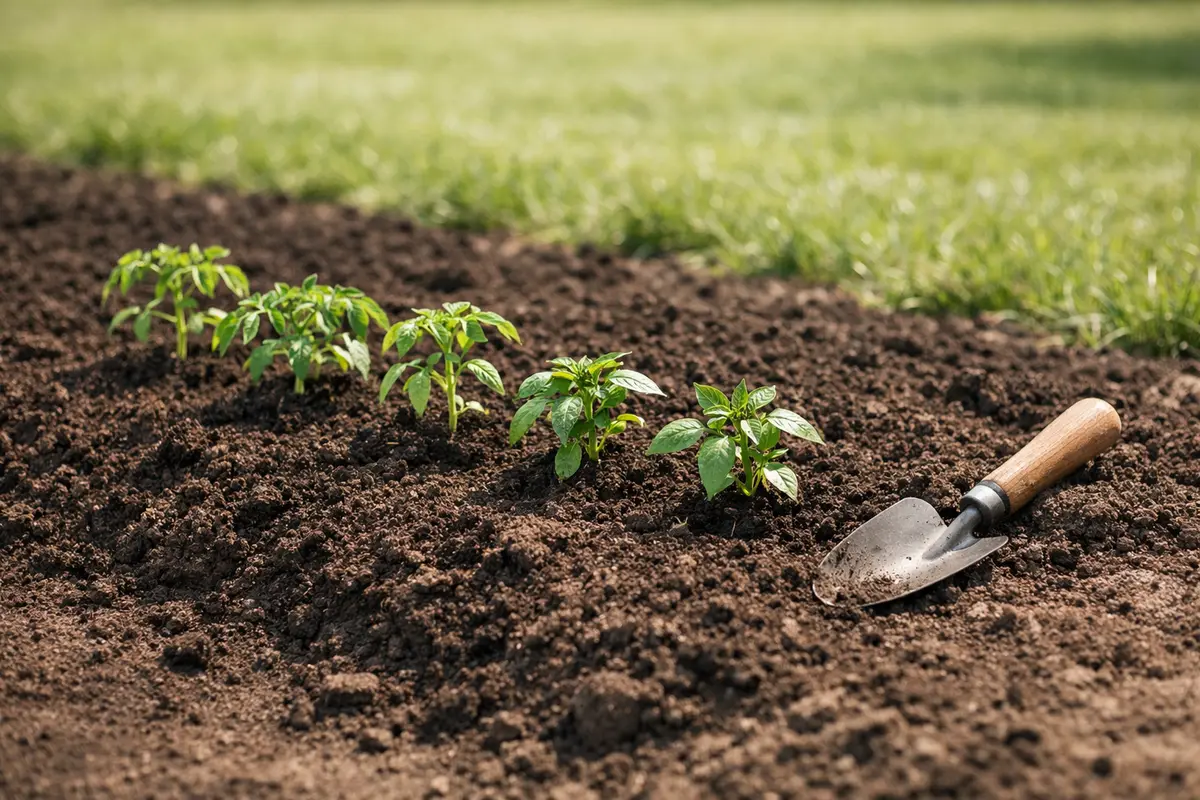
Open NC State Extension’s calendar to the green bean line under the heading “Beans, snap/bush” and you find one part of the state, each with its own spring and fall entries. No exact days appear in the first column. It reads Central North Carolina (Mar 15 to Sep 15 (seed)).
The green bean windows by part of the state
The cells below are the source’s text, unedited.
| Part of the state | Spring windows | Fall windows |
|---|---|---|
| Central North Carolina | Mar 15 to Sep 15 (seed) | — |
Reading the NC State Extension table
NC State’s calendar is written for central North Carolina and sets each crop’s windows on a chart of half-month columns, marking each column S for seed or T for transplants. The dates on the chart are for planting out in the garden, and the page says that shade in summer and frost protection in winter may let you extend the season before and after them.
Do green beans get an indoor start?
Not every crop is started indoors. UNH’s list sows green beans in the garden, which is why the table below is short.
UNH lists beans as a seed crop sown after the last frost, with no indoor start, so the saved sources give no seed-starting weeks for beans at all.
UNH’s own timing for green beans is after the last frost, so North Carolina’s printed window and UNH’s rule of thumb can be set side by side.
| Source | What it says |
|---|---|
| University of New Hampshire | Not started indoors; sow seed after the last frost |
Frost dates for North Carolina cities
These are station dates from weather records, not county averages. Pick the station closest to your garden and elevation, and open its link for the full set of probabilities.
The last column maps a station to a region only where NC State Extension or its county list settles it.
| Station | Last spring 32°F | First fall 32°F | Region in North Carolina’s calendar |
|---|---|---|---|
| Raleigh Durham International Airport, North Carolina | March 31 | November 4 | Central North Carolina |
| Piedmont Triad International Airport, North Carolina | March 30 | November 5 | Central North Carolina |
| Charlotte Douglas Airport, North Carolina | March 30 | November 3 | Central North Carolina |
| Fayetteville Regional Airport, North Carolina | March 22 | November 13 | Central North Carolina |
| Asheville Regional Airport, North Carolina | April 9 | October 28 | Not stated by the source |
Worked example
Take Raleigh Durham International Airport, North Carolina. NOAA’s 1991-2020 normals put the 50% last spring 32°F night on March 31 and the 50% first fall one on November 4.
Here the window starts March 15 (16 days before the median last freeze) and ends September 15 (168 days after it), under the Central North Carolina heading.
Treat the result as a way to see how far the printed dates sit from a real frost record. Your yard may run weeks off the station, so repeat the sum with the station closest to you.
Before you rely on these dates
The calendar is for central North Carolina only; the mountains and the coast run earlier or later, and the page gives no dates for them.
Treat the table as a starting range and look at the ten-day forecast before setting out anything tender.
Sources (3)
- NC State Extension (Bradley, Gunter, Sherk and Driscoll), Central North Carolina Planting Calendar for Annual Vegetables, Fruits, and Herbs, AG-756-01, published July 8, 2016 content.ces.ncsu.edu
- NOAA National Centers for Environmental Information, U.S. Climate Normals 1991-2020, annual and seasonal normals (frost/freeze probabilities by station) ncei.noaa.gov
- University of New Hampshire Cooperative Extension, Growing Vegetables: When to Plant Your Vegetable Garden (fact sheet) extension.unh.edu