
When to Plant Peppers in California: Planting Months by Region
Planting dates for peppers from UC Master Gardener Program in California, with 50% frost dates from NOAA for Sacramento Executive Airport, Santa Rosa Sonoma County Airport, and Imperial County Airport and one worked case.
Updated
Figures checked against their sources on ; next check .
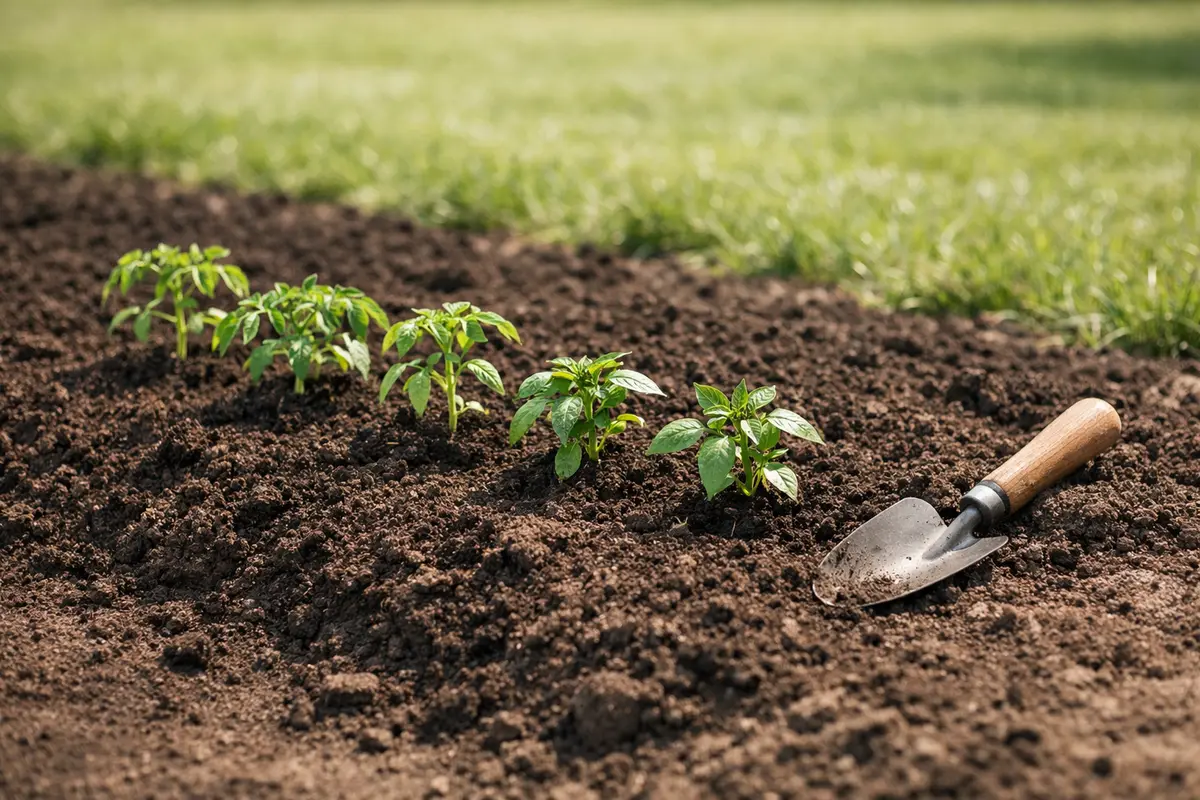
California is covered by UC Master Gardener Program’s own table, and peppers sit in it as a separate row for 4 regions. Dates here are printed as months or as offsets, not as exact days, so the entries read: North & North Coast (May), South Coast (April-May), Interior Valleys (May), and Desert Valleys (March). The row is starred, and the page’s note says a star means transplants, shoots or roots are used for field planting.
California’s dates, row by row
The page files peppers as a warm-season crop.
| Region | Recommended planting months |
|---|---|
| North & North Coast | May |
| South Coast | April-May |
| Interior Valleys | May |
| Desert Valleys | March |
How the California calendar is built
It adds that because the areas are large, the dates are only approximate and the climate may vary even in small sections of the state. The table is credited to the California Master Gardener Handbook, Table 13.2, adapted from Vegetable Gardening Illustrated 1994.
Starting peppers indoors
Seed-starting advice for peppers comes from other states’ extension services, and it counts weeks rather than dates. UNH allows 8 to 10 weeks from seed to transplant.
Both crops appear in two of the sources, and peppers always get the longer start: UMN says 9 weeks and UGA 8, against 5 to 6 and 6 for tomatoes. NDSU and Montana State, saved here for tomatoes only, say nothing about peppers.
Once the seedlings are ready, UNH says peppers are safe to set out 2 weeks after the last frost, after hardening off.
| Source | What it says |
|---|---|
| University of New Hampshire | 8 to 10 weeks from seed to transplant; 2 weeks after the last frost is safe to set out |
| University of Minnesota | Mid-March in Minnesota, 9 weeks indoors |
| NC State | Any transplant: seed 6 to 8 weeks before setting out (central North Carolina calendar) |
| University of Georgia | 8 weeks from seed to transplant size (middle Georgia calendar) |
Typical frost dates at California stations
These are station dates from weather records, not county averages. Pick the station closest to your garden and elevation, and open its link for the full set of probabilities.
A station is tied to a region of the calendar only where the source’s own wording makes that call; the rest are left blank on purpose.
| Station | Last spring 32°F | First fall 32°F | Region in California’s calendar |
|---|---|---|---|
| Sacramento Executive Airport, California | February 2 | December 2 | Interior Valleys |
| Santa Rosa Sonoma County Airport, California | March 2 | November 20 | North & North Coast |
| Imperial County Airport, California | January 14 | December 24 | Desert Valleys |
Worked example
Take Santa Rosa Sonoma County Airport, California. NOAA’s 1991-2020 normals put the 50% last spring 32°F night on March 2 and the 50% first fall one on November 20.
North & North Coast is entered by month only (May), and the median last freeze, March 2, falls before the window opens.
The offsets will shift by a few days with every revision of the normals, so use them as a rough guide to which row to trust and not as a deadline.
Before you rely on these dates
The page suggests contacting experienced gardeners in your community to find more precise dates.
A late cold snap after a mild March is the usual way these windows go wrong; keep a sheet or row cover on hand.
Sources (6)
- UC Master Gardener Program, University of California Agriculture and Natural Resources, Time of planting (table adapted from the California Master Gardener Handbook, Table 13.2) ucanr.edu
- NOAA National Centers for Environmental Information, U.S. Climate Normals 1991-2020, annual and seasonal normals (frost/freeze probabilities by station) ncei.noaa.gov
- University of New Hampshire Cooperative Extension, Growing Vegetables: When to Plant Your Vegetable Garden (fact sheet) extension.unh.edu
- University of Minnesota Extension, Starting seeds indoors (page reviewed 2026) extension.umn.edu
- NC State Extension (Bradley, Gunter, Sherk and Driscoll), Central North Carolina Planting Calendar for Annual Vegetables, Fruits, and Herbs, AG-756-01, published July 8, 2016 content.ces.ncsu.edu
- University of Georgia Cooperative Extension (Bob Westerfield), Vegetable Garden Calendar, Circular 943, published with full review March 10, 2026 extension.uga.edu