
When to Plant Summer Squash and Zucchini in Texas: Fall Dates by Region
What Texas’s extension calendar says about summer squash, copied region by region, plus the frost record at Dallas Fort Worth Airport, Austin Bergstrom Airport, and Houston Intercontinental Airport.
Updated
Figures checked against their sources on ; next check .
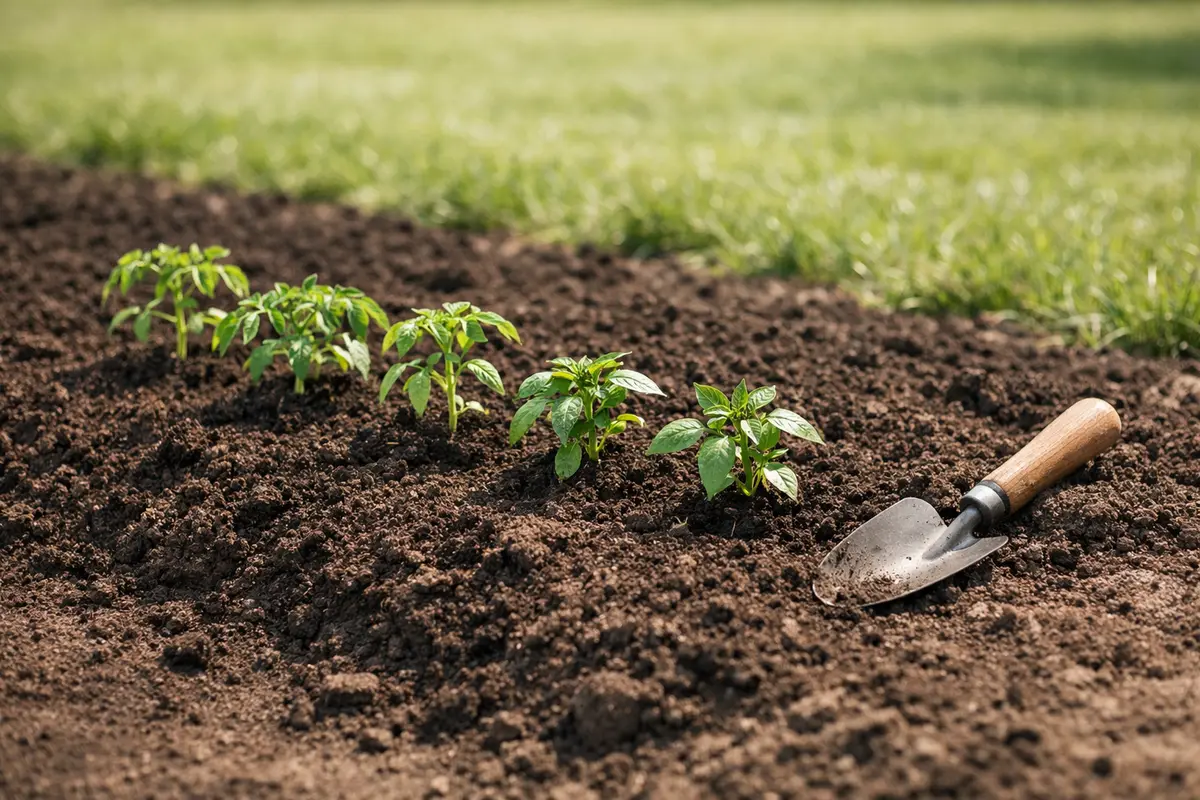
For summer squash, Texas A&M AgriLife Extension prints 5 regions under the heading “Squash, summer”; the table below copies each entry as printed. How far apart are the rows? 70 days, from August 1 in Region I to October 10 in Region V. The guide says fall crops generally do better when started from transplants than from seed.
What Texas A&M AgriLife Extension prints for summer squash
The cells below are the source’s text, unedited.
| Region | Average fall planting date | Last optimum date |
|---|---|---|
| Region I | Aug 1 | — |
| Region II | Aug 15 | — |
| Region III | Sep 10 | — |
| Region IV | Oct 1 | — |
| Region V | Oct 10 | — |
How the Texas calendar is built
Texas A&M’s fall guide prints the average planting date for fall vegetables in five growing regions, numbered I to V, and says that planting at the proper time is probably the most important factor in successful fall gardening. A third table pairs five Texas gardening zones with USDA hardiness zones from 6 to 9B, and the guide tells readers to compare their area’s USDA zone with the Texas zones.
Varieties Texas names
On the variety question the calendar is specific, naming Burpee’s Butterstick, Dixie, Multipik, Black Magic, Eight Ball Tigress, and Gold Rush.
These are the source’s own recommendations; this page adds none and says nothing about how each performs.
Starting summer squash indoors
Indoor sowing is the one part of the job no state table above settles. The University of New Hampshire gives 3 to 4 weeks between sowing and transplanting.
Of the saved sources, one gives weeks for summer squash (UNH) and one gives a handling tip (Minnesota).
In the garden itself, UNH sows summer squash once the soil reaches 70 °F, which a soil thermometer answers better than any calendar.
| Source | What it says |
|---|---|
| University of New Hampshire | 3 to 4 weeks from seed to transplant; 2 weeks after the last frost is safe to set out |
| University of Minnesota | Cucumbers and squash transplant poorly, so raise them in fiber or paper pots that break down in the soil |
Typical frost dates at Texas stations
A 50% frost date is a coin flip, not a promise. In half of the years the last spring freeze comes later than the date shown, and in half of them the first fall freeze comes earlier.
Texas A&M AgriLife Extension does not say which of its regions each city falls in, so the table does not guess.
| Station | Last spring 32°F | First fall 32°F | Region in the calendar |
|---|---|---|---|
| Dallas Fort Worth Airport, Texas | March 8 | November 24 | Not stated by the source |
| Austin Bergstrom Airport, Texas | March 12 | November 16 | Not stated by the source |
| Houston Intercontinental Airport, Texas | February 13 | December 9 | Not stated by the source |
| San Antonio International Airport, Texas | February 26 | November 28 | Not stated by the source |
| Waco Regional Airport, Texas | March 15 | November 15 | Not stated by the source |
Worked example
Start from San Antonio International Airport: the station’s median last spring freeze is February 26, and its median first fall freeze is November 28.
The guide does not say which region San Antonio International Airport belongs to, so use the ends of the table. Region I’s average planting date, August 1, is 119 days before the median first freeze; Region V’s, October 10, is 49 days before it.
The offsets will shift by a few days with every revision of the normals, so use them as a rough guide to which row to trust and not as a deadline.
Before you rely on these dates
This is a fall guide, so it prints no spring dates; this page covers fall planting only.
A late cold snap after a mild March is the usual way these windows go wrong; keep a sheet or row cover on hand.
Sources (4)
- Texas A&M AgriLife Extension (Larry Stein and Joe Masabni), Fall Vegetable Gardening Guide, EHT-056, May 2014 aggie-horticulture.tamu.edu
- NOAA National Centers for Environmental Information, U.S. Climate Normals 1991-2020, annual and seasonal normals (frost/freeze probabilities by station) ncei.noaa.gov
- University of New Hampshire Cooperative Extension, Growing Vegetables: When to Plant Your Vegetable Garden (fact sheet) extension.unh.edu
- University of Minnesota Extension, Starting seeds indoors (page reviewed 2026) extension.umn.edu