
When to Plant Tomatoes in California: Planting Months by Region
What California’s extension calendar says about tomatoes, copied region by region, plus the frost record at Sacramento Executive Airport, Santa Rosa Sonoma County Airport, and Imperial County Airport.
Updated
Figures checked against their sources on ; next check .
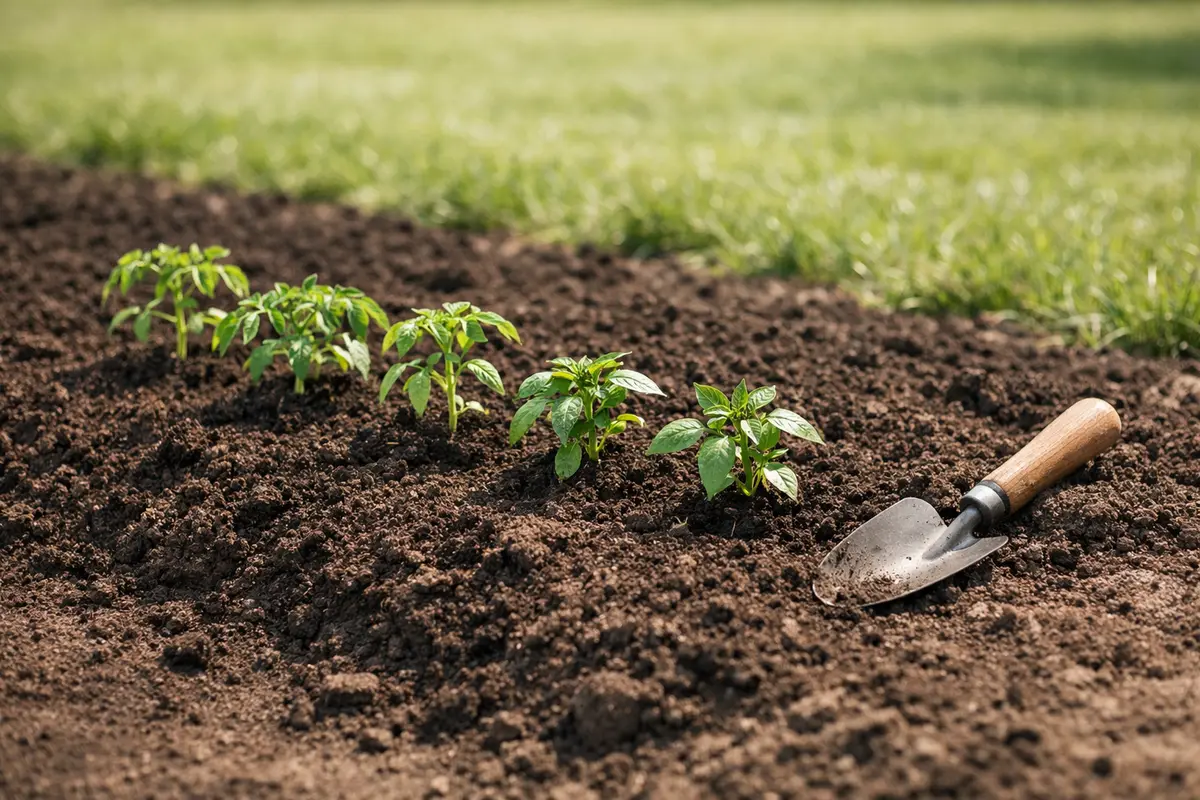
For tomatoes, UC Master Gardener Program prints 4 regions; the table below copies each entry as printed. This calendar is coarser than most: North & North Coast (May), South Coast (April-July 15), Interior Valleys (April-May), and Desert Valleys (Dec-March). The row is starred, and the page’s note says a star means transplants, shoots or roots are used for field planting.
Tomatoes: the California table
The page files tomatoes as a warm-season crop.
| Region | Recommended planting months |
|---|---|
| North & North Coast | May |
| South Coast | April-July 15 |
| Interior Valleys | April-May |
| Desert Valleys | Dec-March |
What to know about this source
The page says its dates are based on the average temperatures for each region and may need adjusting if your area varies widely from the average. The table is credited to the California Master Gardener Handbook, Table 13.2, adapted from Vegetable Gardening Illustrated 1994.
Starting tomatoes indoors
A calendar of outdoor dates says nothing about when the seed tray goes on the windowsill. For that, UNH offers 6 to 8 weeks of indoor growth before tomatoes go out.
Tomatoes are the best-covered crop, with six saved sources. Three of them (UNH, NDSU and Montana State) count from the last frost; the University of Minnesota, NC State and the University of Georgia describe their own climates. The shortest figure is 5 weeks and the longest 10, so no single number is right for every garden.
Once the seedlings are ready, UNH says tomatoes are safe to set out 1 to 2 weeks after the last frost, after hardening off.
| Source | What it says |
|---|---|
| University of New Hampshire | 6 to 8 weeks from seed to transplant; 1 to 2 weeks after the last frost is safe to set out |
| North Dakota State University | Sow 6 weeks before the last frost, transplant 2 weeks after it |
| Montana State University | 6 to 10 weeks to transplant size; the planting window opens 1 week before the last frost |
| University of Minnesota | Early April in Minnesota, 5 to 6 weeks indoors |
| NC State | Any transplant: seed 6 to 8 weeks before setting out (central North Carolina calendar) |
| University of Georgia | 6 weeks from seed to transplant size (middle Georgia calendar) |
Where the frost dates fall in California
A 50% frost date is a coin flip, not a promise. In half of the years the last spring freeze comes later than the date shown, and in half of them the first fall freeze comes earlier.
The last column maps a station to a region only where UC Master Gardener Program or its county list settles it.
| Station | Last spring 32°F | First fall 32°F | Region in California’s calendar |
|---|---|---|---|
| Sacramento Executive Airport, California | February 2 | December 2 | Interior Valleys |
| Santa Rosa Sonoma County Airport, California | March 2 | November 20 | North & North Coast |
| Imperial County Airport, California | January 14 | December 24 | Desert Valleys |
Worked example
For a gardener near Sacramento Executive Airport, NOAA’s even-odds frost dates are February 2 in spring and December 2 in fall.
The Interior Valleys entry runs April to May. Place February 2 on it and the date falls before the window opens.
Do the same subtraction for your own town: choose its nearest station in the frost dates tool, take the 50% dates, and compare them with the row for your part of California.
Before you rely on these dates
The page suggests contacting experienced gardeners in your community to find more precise dates.
Soil that is cold or soaked can hold a crop back even inside the printed window, so check the ground as well as the calendar.
Sources (8)
- UC Master Gardener Program, University of California Agriculture and Natural Resources, Time of planting (table adapted from the California Master Gardener Handbook, Table 13.2) ucanr.edu
- NOAA National Centers for Environmental Information, U.S. Climate Normals 1991-2020, annual and seasonal normals (frost/freeze probabilities by station) ncei.noaa.gov
- University of New Hampshire Cooperative Extension, Growing Vegetables: When to Plant Your Vegetable Garden (fact sheet) extension.unh.edu
- NDSU Extension Service (North Dakota State University), Time and Temperature Chart, from How to Succeed at Seed Starting, publication h1139, print code 2M-2-99 library.nd.gov
- Montana State University Extension (Amy Grandpre), Can I Grow That Here? Vegetable Seed and Transplant Schedules for Garden or Container, MontGuide MT199308AG, revised November 2018 extension-store.montana.edu
- University of Minnesota Extension, Starting seeds indoors (page reviewed 2026) extension.umn.edu
- NC State Extension (Bradley, Gunter, Sherk and Driscoll), Central North Carolina Planting Calendar for Annual Vegetables, Fruits, and Herbs, AG-756-01, published July 8, 2016 content.ces.ncsu.edu
- University of Georgia Cooperative Extension (Bob Westerfield), Vegetable Garden Calendar, Circular 943, published with full review March 10, 2026 extension.uga.edu