
When to Plant Cucumbers in Georgia: Spring and Late-Season Dates
One Georgia calendar, one crop: cucumbers, with the source’s dates left as printed and NOAA frost dates for Atlanta Hartsfield International Airport, Macon Middle Ga Regional Airport, and Augusta Bush Field Airport.
Updated
Figures checked against their sources on ; next check .
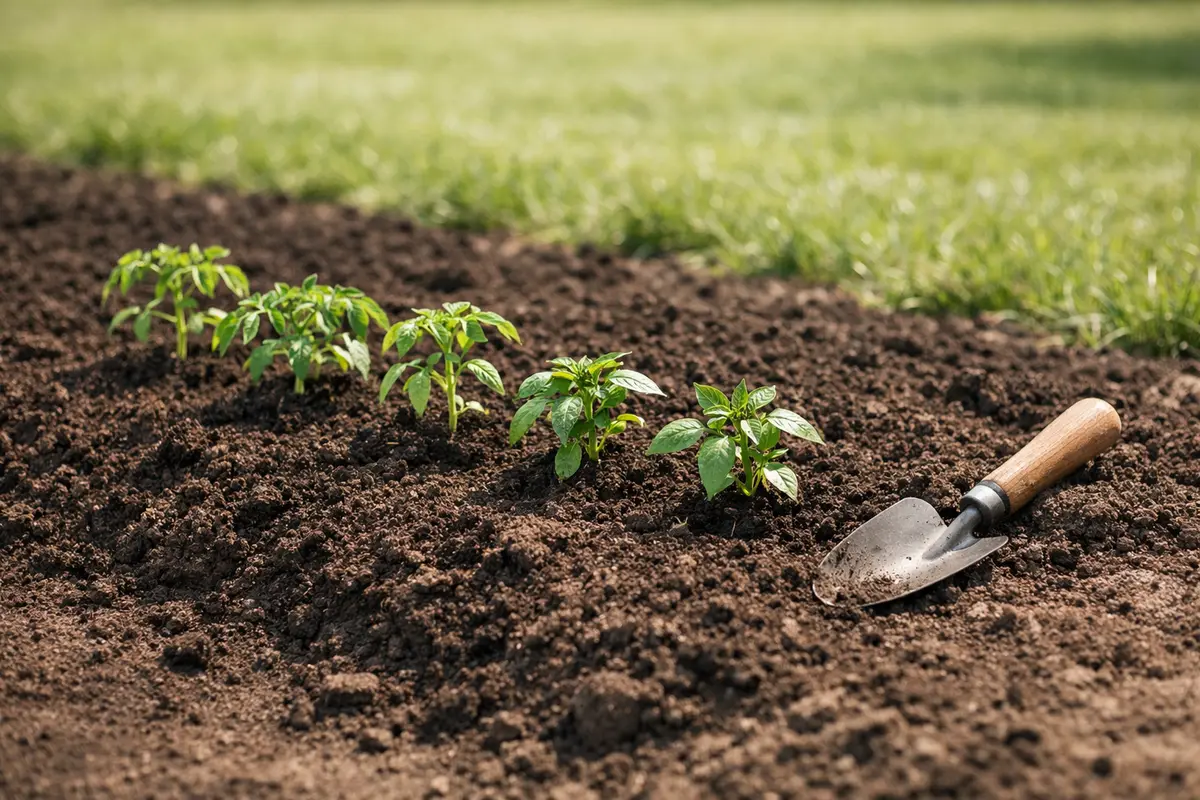
The cucumber entry in Georgia’s calendar is read across 3 parts of the state. The source gives months or relative shifts rather than calendar days; in order, Middle Georgia (April, with the other frost-tender crops), South Georgia (Spring planting dates as much as 2 to 3 weeks earlier), and North Georgia (Spring planting dates 1 to 3 weeks later, moving north through the mountain counties). The row carries no seed or transplant marking, so the packet or plant tag settles which one the dates fit.
What University of Georgia Cooperative Extension prints for cucumbers
UGA names cucumbers in its July entry as a crop that can also go in then, ahead of its August cutoff.
In June it says to harvest beans, peas, squash, cucumbers and okra regularly to prolong production.
| Part of the state | Spring planting | Late-season planting |
|---|---|---|
| Middle Georgia | April, with the other frost-tender crops | By August 31; plant varieties resistant to downy mildew |
| South Georgia | Spring planting dates as much as 2 to 3 weeks earlier | Fall planting dates as much as 2 weeks later |
| North Georgia | Spring planting dates 1 to 3 weeks later, moving north through the mountain counties | Fall planting dates about 2 weeks earlier |
How the Georgia calendar is built
UGA says the two major planting periods are spring, March to May, and fall, mid-July to September. South of that belt, spring planting dates can be as much as 2 to 3 weeks earlier and fall dates as much as 2 weeks later; in the mountain counties of north Georgia spring dates run 1 to 3 weeks later and fall dates about 2 weeks earlier.
Starting cucumbers indoors
Indoor sowing is the one part of the job no state table above settles. The University of New Hampshire gives 3 to 4 weeks between sowing and transplanting.
Of the saved sources, one gives weeks for cucumbers (UNH) and one gives a handling tip (Minnesota).
In the garden itself, UNH sows cucumbers once the soil reaches 70 °F, which a soil thermometer answers better than any calendar.
| Source | What it says |
|---|---|
| University of New Hampshire | 3 to 4 weeks from seed to transplant; 1 to 2 weeks after the last frost is safe to set out |
| University of Minnesota | Cucumbers and squash transplant poorly, so raise them in fiber or paper pots that break down in the soil |
Where the frost dates fall in Georgia
A 50% frost date is a coin flip, not a promise. In half of the years the last spring freeze comes later than the date shown, and in half of them the first fall freeze comes earlier.
The last column maps a station to a region only where University of Georgia Cooperative Extension or its county list settles it.
| Station | Last spring 32°F | First fall 32°F | Region in Georgia’s calendar |
|---|---|---|---|
| Atlanta Hartsfield International Airport, Georgia | March 15 | November 20 | Not stated by the source |
| Macon Middle Ga Regional Airport, Georgia | March 21 | November 10 | Middle Georgia |
| Augusta Bush Field Airport, Georgia | March 23 | November 9 | Middle Georgia |
| Columbus Metro Airport, Georgia | March 5 | November 23 | Middle Georgia |
| Savannah International Airport, Georgia | March 2 | November 30 | Not stated by the source |
Worked example
Pick Columbus Metro Airport, Georgia as the garden. Half of recent years saw their last spring 32°F night by March 5, and half saw their first fall one by November 23.
The Middle Georgia entry runs April. Place March 5 on it and the date falls before the window opens.
On the fall side, Middle Georgia’s last planting date of August 31 leaves 84 days before the November 23 median first freeze.
The offsets will shift by a few days with every revision of the normals, so use them as a rough guide to which row to trust and not as a deadline.
Before you rely on these dates
The circular gives the last planting dates for fall crops, not a window, so the second column is a deadline.
A late cold snap after a mild March is the usual way these windows go wrong; keep a sheet or row cover on hand.
Sources (4)
- University of Georgia Cooperative Extension (Bob Westerfield), Vegetable Garden Calendar, Circular 943, published with full review March 10, 2026 extension.uga.edu
- NOAA National Centers for Environmental Information, U.S. Climate Normals 1991-2020, annual and seasonal normals (frost/freeze probabilities by station) ncei.noaa.gov
- University of New Hampshire Cooperative Extension, Growing Vegetables: When to Plant Your Vegetable Garden (fact sheet) extension.unh.edu
- University of Minnesota Extension, Starting seeds indoors (page reviewed 2026) extension.umn.edu